


How can EB metallic finish kitchen cabinets achieve visual balance and layered expression of warm and cool materials while incorporating oak elements?
Release Time : 2026-06-09
In modern kitchen space design, EB metallic finish kitchen cabinets often become mainstream due to their cool, simple, and high-quality visual effect, while oak elements represent nature, warmth, and a sense of life. The combination of the two is essentially a dialogue between "cool metal" and "warm wood." Through reasonable design proportions and spatial organization, a unified visual balance and layered expression can be achieved.
1. Contrast of Warm and Cool Materials Creates Basic Visual Tension
EB metallic finishes typically present a low-saturation metallic texture in white or gray, possessing modern, rational, and minimalist visual characteristics; while oak materials have natural textures and warm tones, possessing soft, approachable, and lifelike attributes. When the two materials coexist in the same cabinet system, a natural contrast of warm and cool materials is created. This contrast is not a conflict, but rather enhances the overall sense of layering in the space through visual tension, transforming the kitchen from a single-function space into a living scene with design expression.
2. Controlling Material Proportions Achieves Visual Balance
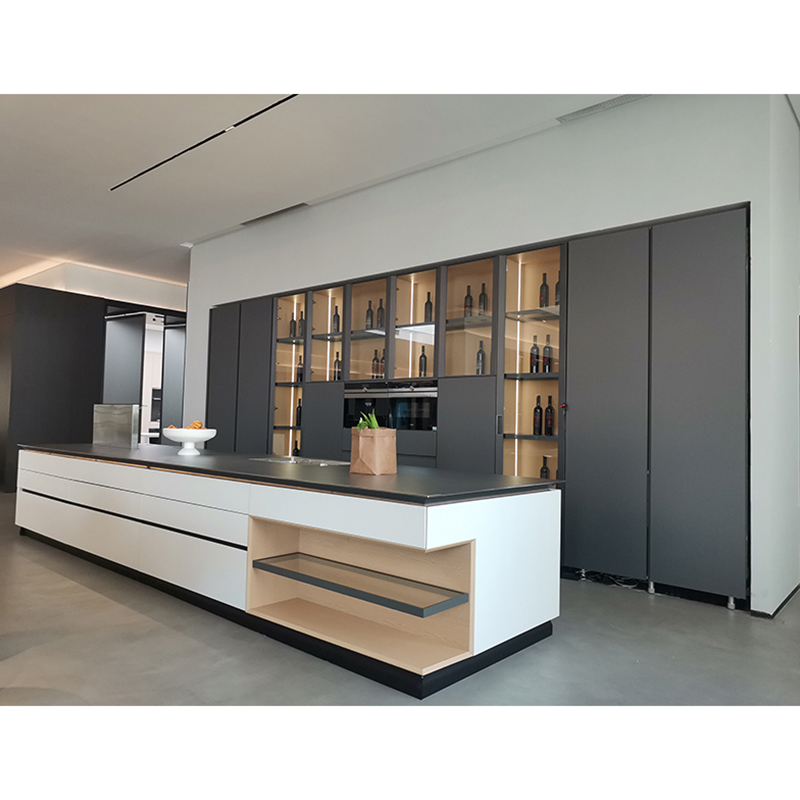
To achieve good visual balance, the key lies in the scientific allocation of material proportions. Typically, EB metal finishes serve as the main structural element, supporting large cabinet doors and the overall tone, while oak elements are used as accents, such as in wall cabinets, open shelves, or island panels. This "primarily cool, secondarily warm" structure maintains a modern and minimalist style while injecting warmth through wood elements, preventing the space from feeling too cold or industrial.
3. Zoning Enhances Spatial Hierarchy
Logically distributing the two materials through functional zoning further enhances spatial hierarchy. For example, using EB metal finishes in the cooking area highlights its cleanliness and ease of cleaning, while introducing oak elements in the storage or display areas creates a natural transition of visual focus. This zoning not only improves usability but also creates rhythmic variations between materials, making the kitchen space more structured and design-oriented.
4. Texture Contrast Enhances Detail Expression
The smooth sheen of EB metal finishes contrasts sharply with the natural grain of oak. This difference between "smoothness and texture" provides rich visual detail to the space. The reflective effect of the metal surface enhances the modern feel, while the natural grain of the wood adds softness and depth. The combination of these two elements creates a dynamic visual effect in the kitchen under different lighting conditions, avoiding monotony.
5. Color Transition Enhances Overall Harmony
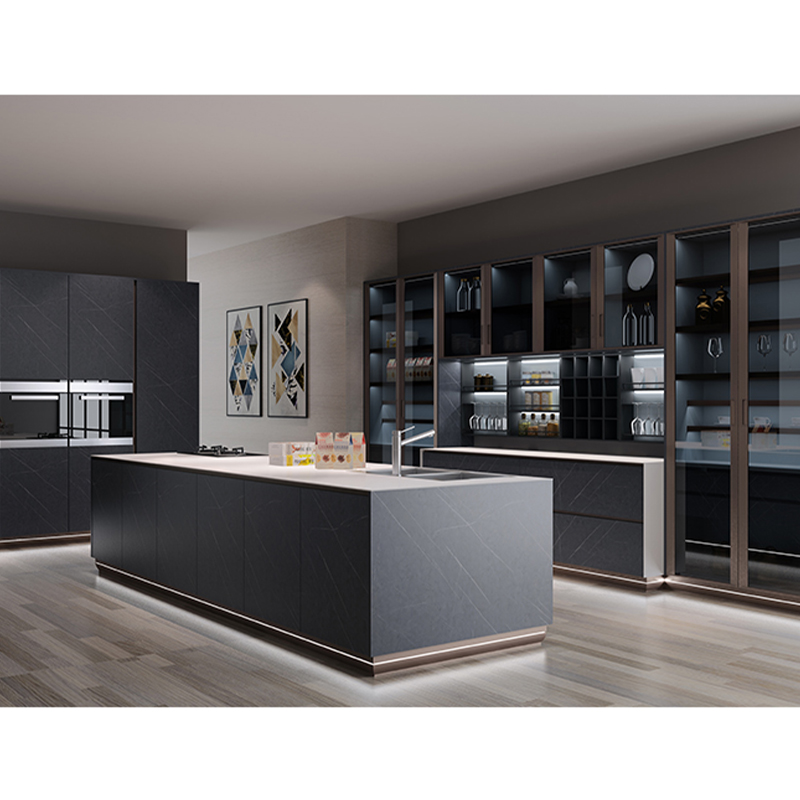
The use of transitional colors is crucial in the fusion of warm and cool materials. For example, introducing a neutral-colored countertop (such as light beige or stone gray) between EB metallic gray and oak can effectively buffer visual conflict, making the material transition more natural. At the same time, unified hardware color schemes and line designs further enhance the overall harmony, avoiding a sense of material disjointedness.
6. Integrated Customization Enhances Overall Design Unity
Modern integrated custom cabinets, through precise size matching and modular design, allow EB metallic finishes and oak elements to seamlessly integrate within the same system. Whether it's the cabinet structure, door panel splicing, or finishing details, a high degree of unity can be achieved, forming a visually complete whole rather than a simple patchwork, further enhancing the sense of sophistication in the space.
In conclusion, the EB metallic finish kitchen cabinet, through reasonable material proportion control, zoning design, texture contrast and color transition, combined with integrated customization technology, achieves a balance and layered expression of warm and cool tones between oak elements and metallic finishes. This design not only enhances the visual appeal of the kitchen space, but also harmoniously integrates functionality and living atmosphere within the same space.
1. Contrast of Warm and Cool Materials Creates Basic Visual Tension
EB metallic finishes typically present a low-saturation metallic texture in white or gray, possessing modern, rational, and minimalist visual characteristics; while oak materials have natural textures and warm tones, possessing soft, approachable, and lifelike attributes. When the two materials coexist in the same cabinet system, a natural contrast of warm and cool materials is created. This contrast is not a conflict, but rather enhances the overall sense of layering in the space through visual tension, transforming the kitchen from a single-function space into a living scene with design expression.
2. Controlling Material Proportions Achieves Visual Balance
To achieve good visual balance, the key lies in the scientific allocation of material proportions. Typically, EB metal finishes serve as the main structural element, supporting large cabinet doors and the overall tone, while oak elements are used as accents, such as in wall cabinets, open shelves, or island panels. This "primarily cool, secondarily warm" structure maintains a modern and minimalist style while injecting warmth through wood elements, preventing the space from feeling too cold or industrial.
3. Zoning Enhances Spatial Hierarchy
Logically distributing the two materials through functional zoning further enhances spatial hierarchy. For example, using EB metal finishes in the cooking area highlights its cleanliness and ease of cleaning, while introducing oak elements in the storage or display areas creates a natural transition of visual focus. This zoning not only improves usability but also creates rhythmic variations between materials, making the kitchen space more structured and design-oriented.
4. Texture Contrast Enhances Detail Expression
The smooth sheen of EB metal finishes contrasts sharply with the natural grain of oak. This difference between "smoothness and texture" provides rich visual detail to the space. The reflective effect of the metal surface enhances the modern feel, while the natural grain of the wood adds softness and depth. The combination of these two elements creates a dynamic visual effect in the kitchen under different lighting conditions, avoiding monotony.
5. Color Transition Enhances Overall Harmony
The use of transitional colors is crucial in the fusion of warm and cool materials. For example, introducing a neutral-colored countertop (such as light beige or stone gray) between EB metallic gray and oak can effectively buffer visual conflict, making the material transition more natural. At the same time, unified hardware color schemes and line designs further enhance the overall harmony, avoiding a sense of material disjointedness.
6. Integrated Customization Enhances Overall Design Unity
Modern integrated custom cabinets, through precise size matching and modular design, allow EB metallic finishes and oak elements to seamlessly integrate within the same system. Whether it's the cabinet structure, door panel splicing, or finishing details, a high degree of unity can be achieved, forming a visually complete whole rather than a simple patchwork, further enhancing the sense of sophistication in the space.
In conclusion, the EB metallic finish kitchen cabinet, through reasonable material proportion control, zoning design, texture contrast and color transition, combined with integrated customization technology, achieves a balance and layered expression of warm and cool tones between oak elements and metallic finishes. This design not only enhances the visual appeal of the kitchen space, but also harmoniously integrates functionality and living atmosphere within the same space.