


What is the maximum weight capacity of the adjustable wooden shelves inside the glass and wood wardrobe cabinet when loaded with folded clothing and accessories?
Release Time : 2026-05-11
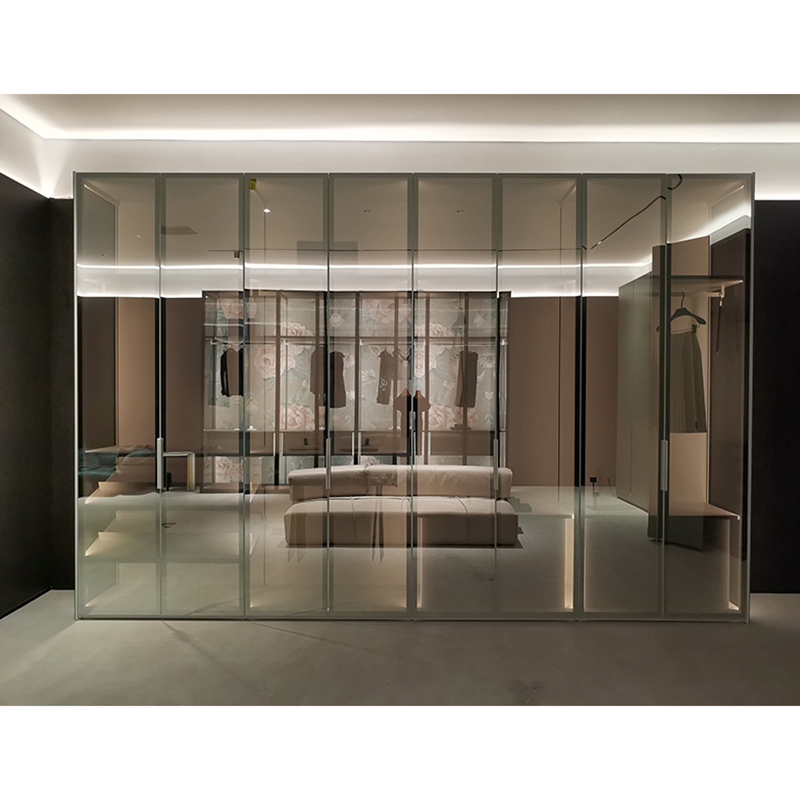
The glass and wood wardrobe cabinet represents a convergence of aesthetic elegance and structural engineering. The transparent glass panels offer a clear view of the contents within, while the wooden framework provides the warmth and durability that defines fine furniture. Yet the most frequently overlooked component of this cabinet is the adjustable wooden shelf. It is the shelf that bears the daily burden of folded sweaters, stacked jeans, and the accumulated accessories of a modern wardrobe. Understanding the maximum weight capacity of these shelves is essential for safe and effective use of the cabinet.
The maximum weight capacity of an adjustable wooden shelf is determined by a combination of material properties, dimensional geometry, and support design. The primary material used for the shelves in a high-quality glass and wood wardrobe cabinet is engineered wood, most commonly medium-density fiberboard or particleboard with a wood veneer or laminate finish. These materials are chosen for their dimensional stability, resistance to warping, and cost-effectiveness compared to solid wood. The density of the engineered wood is a critical factor. A typical MDF shelf has a density of approximately 700 to 800 kilograms per cubic meter. A higher density material provides greater strength and resistance to sagging under load.
The thickness of the shelf is the single most important geometric factor determining its weight capacity. A standard adjustable shelf in a wardrobe cabinet has a thickness of 16 to 18 millimeters. A shelf of this thickness, made from standard MDF, can safely support a uniformly distributed load of approximately 15 to 20 kilograms when the shelf span is 80 centimeters. This load capacity is adequate for folded clothing, which has a relatively low density. A stack of folded sweaters or jeans weighs approximately 2 to 3 kilograms per 10 centimeters of shelf depth. A full shelf of folded clothing, stacked to a height of 30 centimeters, would weigh approximately 15 to 18 kilograms, which is within the safe load range.
The span of the shelf, which is the distance between the two support points, is the second critical geometric factor. The bending moment acting on a shelf under a uniform load is proportional to the square of the span. Doubling the span from 80 centimeters to 160 centimeters increases the bending moment by a factor of four. The shelf must be four times as thick or made from a material with four times the modulus of elasticity to maintain the same load capacity. This is the reason why wide wardrobe cabinets, with a width of 120 centimeters or more, require thicker shelves or additional center supports. A shelf with a span of 120 centimeters, made from 18-millimeter MDF, has a maximum safe load of approximately 10 to 12 kilograms. A shelf with a span of 60 centimeters, made from the same material, can safely support 25 to 30 kilograms.
The support mechanism for the adjustable shelf is the third critical factor. The shelf rests on metal shelf pins that are inserted into pre-drilled holes in the side panels of the cabinet. The pins are typically made from zinc-plated steel or stainless steel, with a diameter of 5 to 6 millimeters. Each pin can support a load of approximately 10 to 15 kilograms in shear before it begins to deform or fail. A shelf is typically supported by four pins, two on each side. The total load capacity of the pin system is the sum of the capacities of the individual pins, but this sum is limited by the weakest pin. If one pin is not fully inserted or if the hole in the side panel is stripped, the load capacity of the entire shelf is reduced to the capacity of the remaining pins.
The quality of the hole in the side panel is an often-overlooked factor. The holes are drilled into the particleboard or MDF side panel. The material around the hole can be compressed or damaged if the hole is drilled too quickly or with a dull drill bit. A damaged hole provides less support for the shelf pin, reducing the load capacity of the shelf. High-quality cabinets use a CNC drilling machine to ensure that the holes are clean, precise, and consistent. Some cabinets also use metal inserts that are pressed into the holes, providing a more durable and reliable support surface for the pins.
The type of load applied to the shelf also affects its capacity. A uniformly distributed load, such as a stack of folded clothing spread evenly across the entire shelf surface, is the most favorable loading condition. The bending moment is distributed across the entire span of the shelf. A concentrated load, such as a heavy handbag or a stack of books placed at the center of the shelf, creates a much higher bending moment at the center point. A shelf that can safely support 20 kilograms of uniformly distributed clothing may fail under a 10-kilogram concentrated load placed at its center. Users should always distribute heavy items evenly across the shelf surface.
The environmental conditions in which the cabinet is used also affect the shelf weight capacity. Wood-based materials are hygroscopic, meaning they absorb moisture from the air. In a high-humidity environment, such as a coastal region or a room without air conditioning, the MDF or particleboard absorbs moisture and swells. The swelling reduces the material's modulus of elasticity and its strength. A shelf that can safely support 20 kilograms in a dry, climate-controlled room may only support 12 to 15 kilograms in a humid environment. The shelf may also begin to sag permanently under a load that would be safe in a dry environment.
The long-term behavior of the shelf under sustained load is another consideration. Wood-based materials exhibit a phenomenon known as creep, in which the material slowly deforms under a constant load over time. A shelf that is loaded to 80 percent of its short-term capacity may show visible sagging after six months of continuous use. The shelf does not fail catastrophically, but the permanent deformation is unsightly and can cause the shelf to become unstable. The recommended practice is to load the shelf to no more than 50 to 60 percent of its short-term capacity to ensure that no visible sagging occurs over the lifetime of the cabinet.
In the specific context of the glass and wood wardrobe cabinet, the presence of the glass door adds an additional consideration. The glass door is typically hinged to the wooden frame and swings open to reveal the shelves. The weight of the glass door is supported by the hinges and the frame, not by the shelves themselves. However, the user must ensure that the shelves are not loaded so heavily that they prevent the glass door from closing properly. A shelf that is sagging under excessive weight may protrude into the path of the closing door, preventing it from sealing properly and potentially damaging the glass.
In conclusion, the maximum weight capacity of the adjustable wooden shelves inside a glass and wood wardrobe cabinet is a function of the shelf material, thickness, span, support mechanism, load distribution, environmental conditions, and long-term creep behavior. A typical 18-millimeter MDF shelf with an 80-centimeter span, supported by four metal pins in a dry indoor environment, can safely support 15 to 20 kilograms of uniformly distributed folded clothing. This capacity is adequate for the vast majority of wardrobe storage needs. The user who understands these factors can load the shelves with confidence, knowing that the elegant combination of glass and wood is supported by a foundation of sound engineering.
The maximum weight capacity of an adjustable wooden shelf is determined by a combination of material properties, dimensional geometry, and support design. The primary material used for the shelves in a high-quality glass and wood wardrobe cabinet is engineered wood, most commonly medium-density fiberboard or particleboard with a wood veneer or laminate finish. These materials are chosen for their dimensional stability, resistance to warping, and cost-effectiveness compared to solid wood. The density of the engineered wood is a critical factor. A typical MDF shelf has a density of approximately 700 to 800 kilograms per cubic meter. A higher density material provides greater strength and resistance to sagging under load.
The thickness of the shelf is the single most important geometric factor determining its weight capacity. A standard adjustable shelf in a wardrobe cabinet has a thickness of 16 to 18 millimeters. A shelf of this thickness, made from standard MDF, can safely support a uniformly distributed load of approximately 15 to 20 kilograms when the shelf span is 80 centimeters. This load capacity is adequate for folded clothing, which has a relatively low density. A stack of folded sweaters or jeans weighs approximately 2 to 3 kilograms per 10 centimeters of shelf depth. A full shelf of folded clothing, stacked to a height of 30 centimeters, would weigh approximately 15 to 18 kilograms, which is within the safe load range.
The span of the shelf, which is the distance between the two support points, is the second critical geometric factor. The bending moment acting on a shelf under a uniform load is proportional to the square of the span. Doubling the span from 80 centimeters to 160 centimeters increases the bending moment by a factor of four. The shelf must be four times as thick or made from a material with four times the modulus of elasticity to maintain the same load capacity. This is the reason why wide wardrobe cabinets, with a width of 120 centimeters or more, require thicker shelves or additional center supports. A shelf with a span of 120 centimeters, made from 18-millimeter MDF, has a maximum safe load of approximately 10 to 12 kilograms. A shelf with a span of 60 centimeters, made from the same material, can safely support 25 to 30 kilograms.
The support mechanism for the adjustable shelf is the third critical factor. The shelf rests on metal shelf pins that are inserted into pre-drilled holes in the side panels of the cabinet. The pins are typically made from zinc-plated steel or stainless steel, with a diameter of 5 to 6 millimeters. Each pin can support a load of approximately 10 to 15 kilograms in shear before it begins to deform or fail. A shelf is typically supported by four pins, two on each side. The total load capacity of the pin system is the sum of the capacities of the individual pins, but this sum is limited by the weakest pin. If one pin is not fully inserted or if the hole in the side panel is stripped, the load capacity of the entire shelf is reduced to the capacity of the remaining pins.
The quality of the hole in the side panel is an often-overlooked factor. The holes are drilled into the particleboard or MDF side panel. The material around the hole can be compressed or damaged if the hole is drilled too quickly or with a dull drill bit. A damaged hole provides less support for the shelf pin, reducing the load capacity of the shelf. High-quality cabinets use a CNC drilling machine to ensure that the holes are clean, precise, and consistent. Some cabinets also use metal inserts that are pressed into the holes, providing a more durable and reliable support surface for the pins.
The type of load applied to the shelf also affects its capacity. A uniformly distributed load, such as a stack of folded clothing spread evenly across the entire shelf surface, is the most favorable loading condition. The bending moment is distributed across the entire span of the shelf. A concentrated load, such as a heavy handbag or a stack of books placed at the center of the shelf, creates a much higher bending moment at the center point. A shelf that can safely support 20 kilograms of uniformly distributed clothing may fail under a 10-kilogram concentrated load placed at its center. Users should always distribute heavy items evenly across the shelf surface.
The environmental conditions in which the cabinet is used also affect the shelf weight capacity. Wood-based materials are hygroscopic, meaning they absorb moisture from the air. In a high-humidity environment, such as a coastal region or a room without air conditioning, the MDF or particleboard absorbs moisture and swells. The swelling reduces the material's modulus of elasticity and its strength. A shelf that can safely support 20 kilograms in a dry, climate-controlled room may only support 12 to 15 kilograms in a humid environment. The shelf may also begin to sag permanently under a load that would be safe in a dry environment.
The long-term behavior of the shelf under sustained load is another consideration. Wood-based materials exhibit a phenomenon known as creep, in which the material slowly deforms under a constant load over time. A shelf that is loaded to 80 percent of its short-term capacity may show visible sagging after six months of continuous use. The shelf does not fail catastrophically, but the permanent deformation is unsightly and can cause the shelf to become unstable. The recommended practice is to load the shelf to no more than 50 to 60 percent of its short-term capacity to ensure that no visible sagging occurs over the lifetime of the cabinet.
In the specific context of the glass and wood wardrobe cabinet, the presence of the glass door adds an additional consideration. The glass door is typically hinged to the wooden frame and swings open to reveal the shelves. The weight of the glass door is supported by the hinges and the frame, not by the shelves themselves. However, the user must ensure that the shelves are not loaded so heavily that they prevent the glass door from closing properly. A shelf that is sagging under excessive weight may protrude into the path of the closing door, preventing it from sealing properly and potentially damaging the glass.
In conclusion, the maximum weight capacity of the adjustable wooden shelves inside a glass and wood wardrobe cabinet is a function of the shelf material, thickness, span, support mechanism, load distribution, environmental conditions, and long-term creep behavior. A typical 18-millimeter MDF shelf with an 80-centimeter span, supported by four metal pins in a dry indoor environment, can safely support 15 to 20 kilograms of uniformly distributed folded clothing. This capacity is adequate for the vast majority of wardrobe storage needs. The user who understands these factors can load the shelves with confidence, knowing that the elegant combination of glass and wood is supported by a foundation of sound engineering.